Can you learn to paint in your 60s, 70s, or 80s?
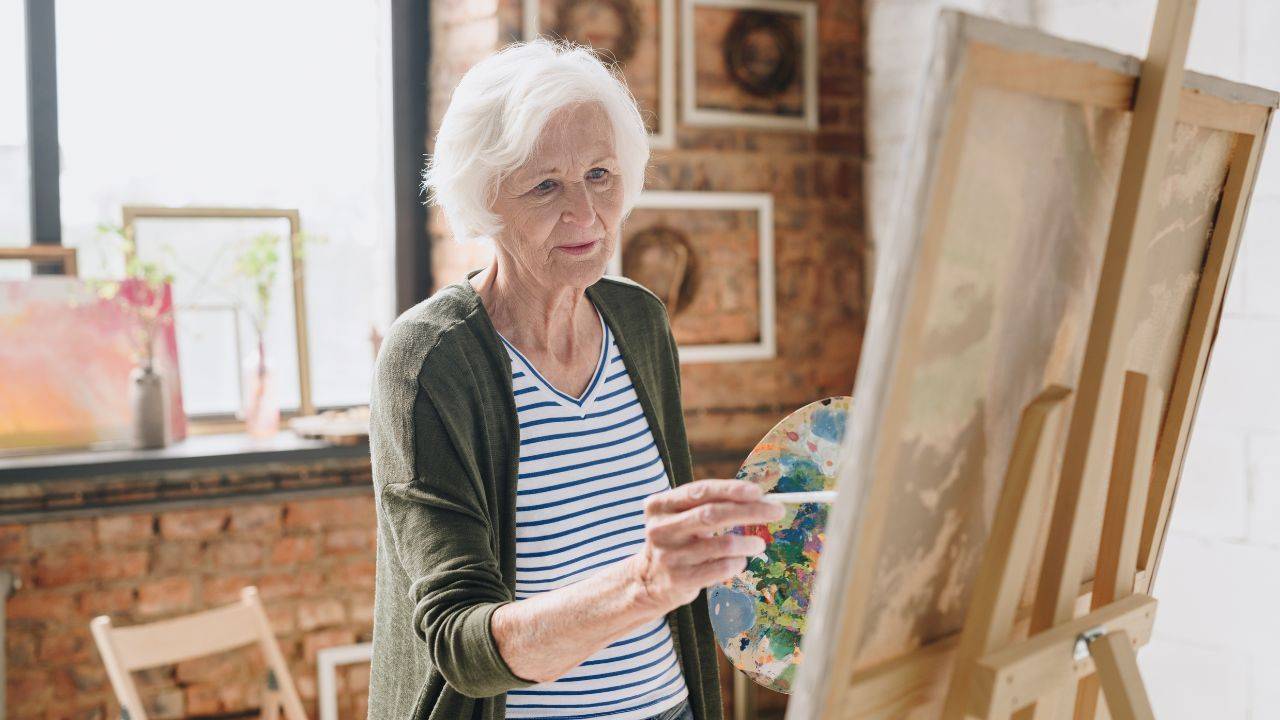
It's never too late to rediscover your inner artist and make your next chapter one of your most creative.
Have you ever looked at a beautiful painting and thought, "I wish I could do that"?
Maybe you've always wanted to paint, but life had other plans. You spent years building a career, raising children, and caring for others. Somewhere along the way, your creative dreams slipped into the background.
Now you're retired, approaching retirement, or finally finding a little time for yourself.
But you may be wondering, can you really learn to paint in your 60s, 70s, or 80s?
My answer is a wholehearted YES!
You don't need natural artistic talent, expensive supplies, or a beautiful home studio. You just need curiosity, a little patience, and the willingness to begin.
I truly believe creativity never has an expiration date. That inner artist who's been quietly waiting all these years? She's still there, ready to come out and play.
Why retirement may be the perfect time to learn to paint
For much of our lives, we're busy doing what needs to be done.
We work. We raise families. We care for others. We manage responsibilities that seem to fill every available moment.
And we tell ourselves, "Someday, when I have more time, I'll get back to painting."
Well, perhaps someday has finally arrived!
Retirement offers a wonderful opportunity to explore interests you've tucked away for years.
Maybe you loved drawing as a child. Perhaps you painted in school. Or maybe you've never held a brush but have always admired the beauty of art.
Whatever your experience, this new chapter is an opportunity to discover what brings you joy.
Painting gives you something to learn, something to look forward to, and something that belongs entirely to you.
And you bring something special to your art: a lifetime of experiences, memories, and perspectives.
My own journey back to painting
I understand how easily creativity can get pushed aside.
Art has always been part of my life. I've loved drawing, painting, photography, and creating things since I was young. But like so many women, I built a career, raised a family, and spent years juggling life's responsibilities.
Now, as I approach my mid-50s, I'm making more time for the creative things I love.
And what a joy it's been!
Over the past year, my mom and I have painted together almost every week through my Paint the Wild online artist community.
Each week, we choose a wildlife or nature-inspired subject. We begin with a sketch, paint the background, and gradually work our way toward the main subject, adding layers and details along the way.
Looking back at our paintings, I can see how much we've both improved.
Our understanding of color, shading, depth, and detail has grown. We've learned new techniques and become more confident with our brushes.
And we've had so much fun doing it!
A weekly creative escape for my mom
Our painting sessions have become especially meaningful for my mom.
She's been caring for my dad as he's experienced some memory challenges and changes that come with aging. Like many caregivers, she carries responsibilities that can be emotionally tiring.
But every Wednesday, we have something wonderful to look forward to.
We connect over Zoom, get out our acrylic paints, and spend time creating together.
For a few hours, we focus on colors, brushstrokes, and the fascinating creatures we're painting.
I've watched her confidence grow tremendously. Her paintings have become more detailed, and she's even started watching additional painting videos to learn new techniques.
Our painting time has become more than an art lesson. It's a chance to connect as mother and daughter, share something we love, and create wonderful memories together.
That's one reason I'm so passionate about helping other women discover painting later in life.
What if I've never been artistic?
One of the biggest things holding women back is believing they aren't artistic.
Maybe you've said:
- "I can't even draw a straight line."
- "I'm just not creative."
- "My painting will never look like yours."
- "I don't have any talent."
But here's something I want you to remember.
You don't have to be good at painting to begin. You begin so you can learn.
Painting is a skill, and skills develop through practice.
In my classes, we start with simple shapes, create a sketch, build the background, and gradually add layers and details.
You learn how colors work together, how light creates depth, and how a few brushstrokes can bring a bird or animal to life.
And every painting teaches you something new.
Your painting doesn't have to look exactly like mine. In fact, I hope it doesn't!
Each of us brings our own personality and creative expression to the canvas.
Maybe your style is loose and colorful. Perhaps you enjoy fine details or bold brushstrokes.
There's room for all of it.
What if my eyesight or hands aren't what they used to be?
This is a real concern for women learning to paint in their 60s, 70s, or 80s.
Perhaps your eyesight has changed, your hands aren't as steady, or holding a small brush feels uncomfortable.
These changes may require adjustments, but they don't necessarily mean you have to give up on painting.
Make painting easier on your eyes
Good lighting is one of the most important things you can provide.
Try painting near a window or using an adjustable lamp that helps you see your colors and details clearly.
You can also:
- Wear your glasses or prescribed vision correction.
- Enlarge reference photos on a computer or tablet.
- Use a magnifying lamp.
- Choose subjects with clear shapes and contrast.
- Work on larger canvases rather than tiny paintings.
With online painting classes, you can also enlarge your screen and see details more easily.
And because our Paint the Wild sessions are recorded, you can pause, rewind, or watch a section again whenever you need more time.
Choose comfortable brushes and a relaxed setup
If holding small brushes is difficult, experiment with brushes that have larger handles or comfortable grips.
A tabletop easel, supportive chair, or a comfortable position for resting your forearm may also help.
And don't feel pressured to paint tiny details.
A loose, impressionistic painting can be every bit as beautiful as a realistic one.
Take breaks when needed and choose techniques that feel comfortable. If pain or other physical difficulties interfere, an occupational therapist or healthcare professional may be able to suggest helpful adaptations.
Remember, art is about expression, not perfection.
Why painting can be so rewarding later in life
One of the things I love most about painting is how easy it is to lose track of time.
When I'm mixing colors, creating shapes, or adding details to a painting, everyday worries seem to fade into the background.
I'm simply enjoying the moment.
Painting encourages you to observe, make decisions, solve little creative problems, and try new things.
You're using your hands, eyes, and mind while doing something enjoyable.
And when you finish, you have something you created yourself.
That feeling of accomplishment can be incredibly rewarding!
For women navigating retirement, caregiving, or other life changes, painting can offer a welcome break from daily responsibilities.
It's not a medical treatment or a promise against age-related changes. But it can be a meaningful way to enjoy learning, self-expression, relaxation, and connection with others.
Sometimes, having something you love to look forward to each week makes a wonderful difference.
How to start painting in your 60s, 70s, or 80s
If you're ready to give painting a try, keep things simple.
You don't need to buy every supply in the store or transform an entire room into a studio.
1. Choose a painting medium you'd enjoy
There are many wonderful ways to paint.
- Acrylics: My personal favorite for wildlife painting. They're versatile, affordable, and easy to layer.
- Watercolors: Great for nature journals, loose paintings, and portable travel kits.
- Oils: Wonderful for blending and rich colors, though they may require more preparation.
- Pastels: Fun for exploring color and texture without traditional brushes.
If you're completely new, acrylics or watercolors can be wonderful places to begin.
2. Start with basic, affordable supplies
Painting doesn't have to be expensive.
I bought around ten tubes of acrylic paint, and they've lasted me more than a year while painting almost every week!
Of course, that depends on your painting size and how much paint you use.
For acrylics, start with:
- A small set of paints
- A few brushes
- Canvas panels or acrylic paper
- A palette
- A water container
- Paper towels
- A pencil and eraser
That's enough to begin!
3. Find a comfortable place to paint
You might be surprised by how little space you need.
A small desk, kitchen table, or even a clear corner of your countertop can work beautifully.
Sometimes a space around two feet by two feet is enough for a small painting and basic supplies.
Maybe you enjoy painting in a sunroom overlooking your backyard. Or perhaps you prefer a cozy bedroom desk or patio when the weather is nice.
Keep your supplies in a basket or tote if you don't have a dedicated studio.
The goal is to make painting easy and inviting.
4. Choose a simple nature-inspired subject
I love finding painting inspiration in nature.
Maybe it's a colorful bird, a butterfly, a fox, a wildflower, or a quiet landscape.
Choose a subject with clear shapes and a simple background.
Better yet, step outside with your camera!
Explore your backyard, visit a park, or wander along a nearby trail. Notice the wildlife, colors, and little details that catch your eye.
You may discover your next painting subject right outside your window.
5. Follow a beginner-friendly painting class
One of the easiest ways to learn is by following an instructor who guides you through each step.
Inside my Paint the Wild Online Artist Community, we paint a new nature-inspired subject together each Wednesday.
I choose our painting, prepare the lesson, and guide you through sketching, painting the background, and adding the final details over Zoom.
You don't have to wonder what to paint.
Just bring your supplies, settle into your favorite creative spot, and follow along.
What if your first painting doesn't turn out?
I have a little secret.
Not every painting I create turns out the way I hoped!
Sometimes the colors aren't quite right. Maybe the proportions seem off, or an animal looks different than I imagined.
But every painting gives me an opportunity to learn.
If yours doesn't turn out as expected, ask yourself:
- What did I enjoy?
- What did I learn?
- What might I do differently next time?
You could even paint the same subject twice!
The second time, you'll already understand some of the challenges and may approach them with more confidence.
Don't let one disappointing painting keep you from creating.
Just move on to the next one and enjoy discovering what you can do.
Find your weekly creative rhythm
If there's one thing I've learned from painting with my mom, it's that consistency makes a difference.
We don't paint every day or spend endless hours practicing.
But we show up almost every week.
And that simple rhythm has helped us learn so much.
We've become more comfortable sketching, mixing colors, creating backgrounds, and bringing wildlife subjects to life.
That's why I encourage women to find a creative rhythm that fits their lives.
Maybe you paint every Wednesday morning. Perhaps Sunday afternoons work better.
You don't need a rigid schedule.
You simply need a gentle reason to return to your art.
Let nature inspire your next creative chapter
Nature has always been one of my greatest inspirations.
With my background in wildlife biology and experience as a park ranger and naturalist, I've spent much of my life learning about animals and the natural world.
I love bringing that knowledge into my painting classes.
When we paint a bird or animal, I share a little Story of the Wild Side about our subject.
We might explore a bird's unusual calls, a fox's clever behavior, or the fascinating adaptations that help an animal survive.
Then we discover what nature might teach us about ourselves.
A fox can remind us to stay curious.
A bird can inspire us to keep trying.
And the changing seasons remind us that growth happens throughout life.
Painting gives us a wonderful reason to slow down and appreciate these little wonders.
Join me inside Paint the Wild
If you've been thinking about learning to paint later in life, I'd love to personally invite you into my Paint the Wild Online Artist Community.
I'm growing this welcoming community for women who want to rediscover their creativity, make new friends, and build a joyful weekly painting rhythm.
Inside, you'll find:
- Wednesday live painting sessions: Step-by-step nature-inspired painting lessons over Zoom.
- Monday Creative Nights: Relaxed meetups where you can work on your own projects alongside others.
- Recorded painting lessons: Watch past sessions and paint at your own pace.
- Monthly nature themes: Explore wildlife, landscapes, and the beauty of the changing seasons.
- Creative connection: Share your artwork, ask questions, and encourage other artists.
I'm especially excited to welcome founding members who want to help shape this growing community and share ideas for our future paintings.
My dream is to create a place where women have something creative to look forward to each week and feel a genuine sense of belonging.
Your creativity never has an expiration date
If there's one thing I hope you take away from this article, it's this:
You are never too old to follow your creative heart.
Perhaps you've spent decades caring for your family, building a career, or putting everyone else's needs first.
Now it's your turn.
Go outside. Take your camera on a nature walk. Notice the birds in your backyard. Gather a few brushes and paints.
And give yourself permission to create something just for you.
Your first painting doesn't have to be perfect. Neither does your next one.
What matters is that you're learning, exploring, and rediscovering the joy of creating.
I've seen what a year of weekly painting has done for my mom and me. We've grown in our skills and confidence, but even more importantly, we've shared meaningful time doing something we love.
And I'd love for you to experience that same joy.
Whether you're 60, 70, 80, or beyond, there's still so much beauty to discover and so much creativity waiting to unfold.
Your inner artist is still there. Isn't it time to let her come out and play?
Come join me inside Paint the Wild. Bring your curiosity, your creative dreams, and a willingness to try.
I hope to see you on the inside!
Warmly,
Glenda Crawford
Artist • Naturalist • Creative Life Guide
Discover the Wild Side
